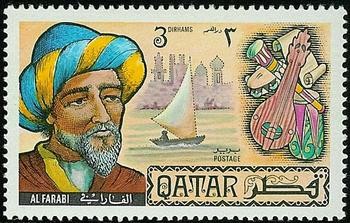
Abu Nasr Al-Farabi (c. 872–950 CE)
Abu Nasr Al-Farabi (c. 872–950 CE), known in the Western world as Alpharabius, was a towering philosopher, logician, and music theorist of the Islamic Golden Age. Often referred to by medieval scholars as the "Second Teacher"—positioning him second only to Aristotle—Al-Farabi played a critical role in preserving, translating, and harmonizing classical Greek philosophy with Islamic theology. Working primarily in Baghdad and Damascus, he wrote extensive commentaries on Aristotle's logical treatises and pioneered early Islamic political philosophy, notably in his masterpiece The Virtuous City (Ara al-Ahl al-Madina al-Fadila), which adapted Plato's Republic into a brilliant framework for an ideal society led by an enlightened philosopher-prophet.
Beyond his massive contributions to metaphysics and political science, Al-Farabi was an extraordinary polymath who fundamentally shaped the history of music theory. His monumental work, Kitab al-Musiqa al-Kabir (The Great Book of Music), provided the most comprehensive mathematical and philosophical analysis of musical intervals, scales, and acoustics written in the medieval era. Legend also attributes to him the invention of several traditional instruments, including the qanun and the rabab. By seamlessly bridging the analytical world of logical science with the creative world of artistic expression, his intellectual legacy laid the essential foundations for both the European Renaissance and subsequent generations of Islamic philosophers like Avicenna and Averroes.
Beyond his massive contributions to metaphysics and political science, Al-Farabi was an extraordinary polymath who fundamentally shaped the history of music theory. His monumental work, Kitab al-Musiqa al-Kabir (The Great Book of Music), provided the most comprehensive mathematical and philosophical analysis of musical intervals, scales, and acoustics written in the medieval era. Legend also attributes to him the invention of several traditional instruments, including the qanun and the rabab. By seamlessly bridging the analytical world of logical science with the creative world of artistic expression, his intellectual legacy laid the essential foundations for both the European Renaissance and subsequent generations of Islamic philosophers like Avicenna and Averroes.