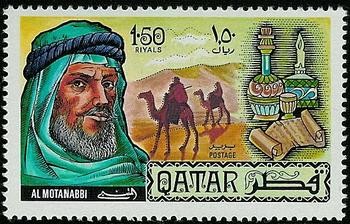
Al-Mutanabbi (915–965 CE)
Abu al-Tayyip Ahmad ibn al-Husayn al-Mutanabbi, universally known simply as Al-Mutanabbi (915–965 CE), was a towering poetic genius of the Abbasid era and is widely regarded as the greatest and most influential poet in the history of the Arabic language. Born in Kufa, Iraq, his nickname—meaning "the would-be prophet"—stemmed from his youth, when his extraordinary eloquence and radical political ambitions led to a brief imprisonment. Blessed with an unparalleled mastery of Arabic grammar, vocabulary, and rhetoric, he spent his adult life traveling between the grandest courts of the medieval Islamic world, most famously serving as the official court poet and close companion to the Hamdanid prince Sayf al-Dawla in Aleppo, where he composed epic panegyrics celebrating the prince's military campaigns against the Byzantine Empire.
Al-Mutanabbi’s poetry is celebrated for its remarkable blend of grand linguistic artistry, philosophical depth, and fierce personal pride. His verses did not merely praise rulers; they captured timeless human themes of courage, honor, the transience of life, and the relentless pursuit of glory, seamlessly embedding wise, aphoristic maxims that are still quoted across the Arab world today as everyday proverbs. A man of immense arrogance and martial ambition, his sharp satirical poems ultimately proved fatal, as he was killed near Baghdad by a disgruntled tribal chief who had been insulted in one of his verses. By elevating the classical Arabic qasida to its absolute creative zenith, Al-Mutanabbi left behind an immortal literary legacy that continues to shape Arabic literature, identity, and poetic expression across generations.
Al-Mutanabbi’s poetry is celebrated for its remarkable blend of grand linguistic artistry, philosophical depth, and fierce personal pride. His verses did not merely praise rulers; they captured timeless human themes of courage, honor, the transience of life, and the relentless pursuit of glory, seamlessly embedding wise, aphoristic maxims that are still quoted across the Arab world today as everyday proverbs. A man of immense arrogance and martial ambition, his sharp satirical poems ultimately proved fatal, as he was killed near Baghdad by a disgruntled tribal chief who had been insulted in one of his verses. By elevating the classical Arabic qasida to its absolute creative zenith, Al-Mutanabbi left behind an immortal literary legacy that continues to shape Arabic literature, identity, and poetic expression across generations.