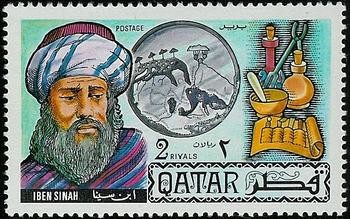
ibn Sina (c. 980–1037 CE)
Abu Ali al-Husayn ibn Abd Allah ibn Sina (c. 980–1037 CE), universally known in the West as Avicenna, was a towering Persian polymath and philosopher who stands as one of the most brilliant and influential intellectuals of the Islamic Golden Age. Born near Bukhara in the Samanid Empire, he was a child prodigy who mastered classical literature, Islamic law, and geometry by early adolescence, expanding his expertise independently into advanced medicine and metaphysics. Writing primarily during a period of intense geopolitical fragmentation, he served alternatively as a vizier and court physician to various regional rulers, composing over two hundred treatises that systematically integrated classical Greek philosophy, Aristotelian logic, and Islamic theology into a comprehensive, unified intellectual framework.
In the realm of science, Ibn Sina earned enduring global renown as the "father of modern medicine" through his monumental encyclopedia, Al-Qanun fi al-Tibb (The Canon of Medicine). This foundational five-volume masterpiece codified ancient and contemporary medical knowledge, introducing rigorous clinical trials, early principles of infectious disease transmission and quarantine, and a systematic framework for pharmacology that served as the standard medical textbook across Europe and Asia for over five centuries. Parallel to his medical triumphs, his philosophical magnum opus, Kitab al-Shifa (The Book of Healing), pioneered groundbreaking theories in logic, metaphysics, and psychology—most famously his "Floating Man" thought experiment demonstrating self-awareness and the independence of the soul. By bridging empirical science with profound metaphysical inquiry, his immense legacy decisively shaped both Islamic scholasticism and the European Renaissance.
In the realm of science, Ibn Sina earned enduring global renown as the "father of modern medicine" through his monumental encyclopedia, Al-Qanun fi al-Tibb (The Canon of Medicine). This foundational five-volume masterpiece codified ancient and contemporary medical knowledge, introducing rigorous clinical trials, early principles of infectious disease transmission and quarantine, and a systematic framework for pharmacology that served as the standard medical textbook across Europe and Asia for over five centuries. Parallel to his medical triumphs, his philosophical magnum opus, Kitab al-Shifa (The Book of Healing), pioneered groundbreaking theories in logic, metaphysics, and psychology—most famously his "Floating Man" thought experiment demonstrating self-awareness and the independence of the soul. By bridging empirical science with profound metaphysical inquiry, his immense legacy decisively shaped both Islamic scholasticism and the European Renaissance.